A Thoughtful Approach to Color in the Home
Updated: Jan 19

Editor's Note: This post was originally published in 2016 and has been updated to reflect our current perspective on using color to create layered, enduring interiors.
Color is one of the most powerful tools in interior design. When used thoughtfully, it shapes how a home feels, how spaces connect, and how people experience their surroundings day to day.
Rather than thinking of color as seasonal or trend-driven, we view it as a foundational layer in the home. One that brings warmth, depth, and cohesion over time. The goal is not to “refresh” a space for a moment, but to create interiors that feel collected, balanced, and enduring.
At Asha Maia Design, our perspective on color has evolved over the years. As a full-service interior design studio serving Northern Virginia and the Washington, DC area, we continue to return to the belief that successful color palettes are rooted in proportion, restraint, and intention.
Start with a Quiet Foundation
The most successful color stories begin with a calm, versatile base. Lighter and neutral tones create continuity throughout a home and allow other elements to take on greater presence.
This approach is especially important in residential interior design projects where longevity and livability matter just as much as visual impact.

Use Color with Intention
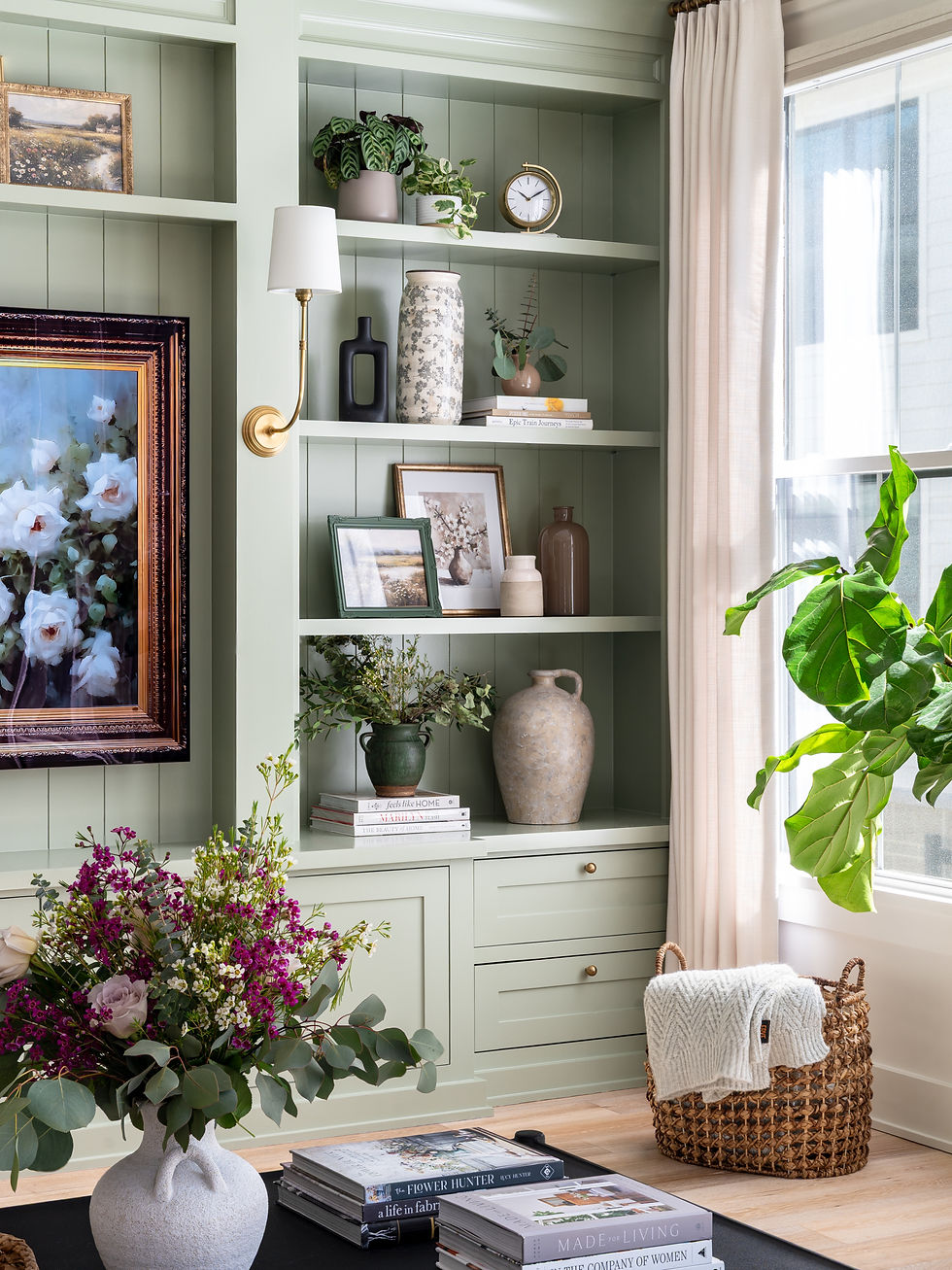
Color can be used quietly or boldly, but it should always be intentional. In some rooms, deeper tones are introduced in measured ways through furnishings, textiles, or architectural detail. In others, we embrace color fully, allowing it to wrap the space and create a sense of depth and intimacy.

Color drenching, when thoughtfully considered, brings cohesion and character, transforming a room into an experience rather than a backdrop. The success lies not in how much color is used, but in how purposefully it is applied in relation to light, scale, and surrounding materials.
Vary Scale and Proportion
A well-balanced interior relies on variation. Some colors should be present quietly and consistently, while others appear in smaller, more concentrated moments.
Rather than relying on rigid formulas, we focus on balance. A restrained palette with one or two richer notes creates a sense of ease and cohesion. Color should feel integrated into the room, not layered on top of it.
This is especially true when designing whole homes, where visual continuity plays a significant role in how spaces relate to one another.
Let Materials Do Some of the Work
Color does not live only in paint. Natural materials play a significant role in shaping a home’s palette.
Wood tones, stone, metals, greenery, and textiles all contribute subtle color variation. These elements often introduce warmth and depth in ways that feel more organic and lasting than paint alone.
When materials are considered early in the interior design process, the overall palette feels intentional rather than assembled.

Think Beyond Individual Rooms
One of the most common mistakes with color is treating each room in isolation. A home feels most successful when there is a clear relationship between spaces.
This does not mean every room should match. It means colors should relate to one another, allowing the home to unfold naturally as you move through it. Repetition, variation, and rhythm create a sense of continuity that makes a house feel considered and complete.
For homeowners in Northern Virginia and the DC area, this whole-home approach is especially valuable, as it allows interiors to feel cohesive across both new construction and established homes.
Our Perspective Today
While our earlier work explored color more explicitly, our approach today is quieter and more nuanced. We focus on creating interiors where color supports the architecture, the furnishings, and the lives being lived within the space.
As a full-service interior design studio, we consider color as one part of a holistic residential interior design process. Each decision is made in conversation with layout, materials, furnishings, and light to ensure the home functions beautifully as a whole.
Color should enhance how a home feels to live in. It should invite you in, not demand attention.
When used thoughtfully, it becomes one of the most enduring aspects of a well-designed home.
A Final Thought
If you are drawn to color but unsure how to incorporate it in a way that feels timeless, that uncertainty is often a sign that a more comprehensive approach is needed. Color works best when it is considered alongside architecture, furnishings, and the way a home is used every day.
This is where full-service interior design becomes invaluable. Rather than making isolated decisions, we guide the process from the beginning, ensuring that every element contributes to a cohesive, layered result.
If you are considering how color fits into your home and would like guidance grounded in experience and intention, our full-service interior design services support clients in Northern Virginia and the Washington, DC area in creating homes that feel both elevated and livable.


Bài bạn viết gọn gàng, đọc liền một lượt là nắm được ý nên mình thấy rất dễ theo. Cảm ơn bạn đã chia sẻ nhé. Mình thì gần như ngày nào cũng xem thống kê XSMB, nhưng hồi trước phải nhảy qua lại nhiều nơi, vừa mất thời gian vừa dễ lẫn thông tin. Thế nên mình tự gom lại cho tiện, chủ yếu để giữ thói quen theo dõi hằng ngày và lúc cần thì mở ra xem nhanh. Mình để chung trên soicau247.com để khỏi phải lục lại nhiều nguồn mỗi lần muốn kiểm tra. Ai hay xem số liệu cập nhật theo ngày thì có thể ghé qua đường dẫn này: https://soicau247.com/thong-ke-lo-gan-xsdl.html.